skip to main |
skip to sidebar

WASHINGTON: It has emerged that Oprah Winfrey fans have been confusing the retiring talk show queen with Opera Software, a Norweigan company that makes web and mobile browsers. The company recently posted a blog commemorating Winfrey's final TV show by publishing some of the emails that it received throughout these years, reports the LA Times. It claims to have received mails seeking money, appearances on Oprah's show and in one case, free Hannah Montana tickets. "To us in Opera this is really sad news. This show has brought us great joy throughout the years. We've been receiving lots of mail from Oprah fans, asking us questions, complaining or simply just opening up, telling us about their lives," the company wrote in a blog post. Since Oprah is somewhat a difficult name to spell (and even to pronounce, as Oprah explained to Johnny Carson in 1986), the result has been years of misdirected letters. In reply to a letter by a 9-year old seeking Hannah Montana tickets, the company wrote, "Although Hannah and Billy [Ray Cyrus] are great, there is a lot of other cool stuff out there. Have you heard of NOFX?"
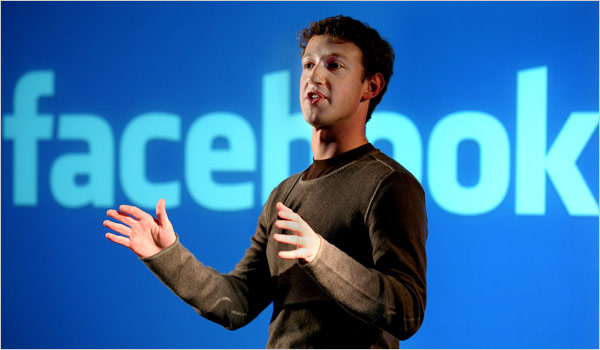
 CHICAGO: Calling the case a "brazen and outrageous fraud," Facebook founder Mark Zuckerberg urged a federal court to dismiss a lawsuit by a New York man claiming he owns a huge stake in the social networking website.
In a filing with the US District Court in Buffalo, New York, Facebook and Zuckerberg said the lawsuit by Paul Ceglia is based on a "doctored contract and fabricated evidence." They also called the plaintiff "an inveterate scam artist whose misconduct extends across decades and borders."
Ceglia, a wood pellet salesman from Wellsville, New York, has contended that he contracted in 2003 for 50 per cent of Zuckerberg's interest in what became Facebook.
Facebook is privately held, but analysts have said it could be worth $70 billion should it go public.
Forbes magazine in March estimated Zuckerberg's net worth at $13.5 billion. Ceglia originally sued last July, saying he had contracted with Zuckerberg for an 84 per cent Facebook stake. In an amended complaint Ceglia outlined what he called emails between himself and Zuckerberg to support his case.
In their response, Facebook and Zuckerberg said they "specifically deny any liability" to Ceglia, and called the lawsuit "a brazen and outrageous fraud on the court."
They also questioned why Ceglia waited seven years to sue, saying he had long been "utterly silent" as Facebook "grew into one of the world's best-known companies."
A lawyer representing Ceglia declined immediate comment.
According to published reports, Ceglia pleaded guilty in 1997 to possession of hallucinogenic mushrooms in Texas. In 2009, he was accused of fraud and had his business shut down.
In a separate case, Cameron and Tyler Winklevoss are appealing to the US Supreme Court a court ruling that upheld their $65 million cash-and-stock settlement with Facebook.
The twin brothers have accused Facebook and Zuckerberg of stealing their idea for the website. The battle between the Winklevoss twins and Zuckerberg was dramatised in the 2010 Oscar-nominated movie " The Social Network".
 NEW YORK/NEW DELHI: Xerox Corp, best known for its printing products, is in discussions with HCL Technologies to move a "a few hundred Xerox people" to India's No. 4 software services firm, a Xerox spokesman said.
The US company aims to "benefit from the investments HCL makes with its infrastructure and platforms," but this is "not a done deal" yet, the spokesman said in an e-mailed response from Washington.
A HCL spokeswoman declined to comment on the talks.
 SEATTLE: Microsoft Corp's board stood behind Chief Executive Officer Steve Ballmer, defending its longtime leader after influential hedge fund manager David Einhorn touched off a debate by calling for his dismissal.
The fund manager, who made his name warning about Lehman Brothers Holdings Inc's financial health before the investment bank's collapse, accused Ballmer of being stuck in the past, launching the sharpest attack yet by a high-profile investor against the company's leadership.
Einhorn's comments, which echo what some investors have said for some years in private, caused a stir on Wall Street and helped Microsoft shares climb 2 per cent on Thursday to $24.67.
"His continued presence is the biggest overhang on Microsoft's stock," Einhorn told fellow fund managers at the annual Ira Sohn Investment Research Conference in New York.
Microsoft's nine-person board, including Chairman and co-founder Bill Gates, supports Ballmer, a source close to the board told Reuters. Microsoft itself declined comment.
Gates, who co-founded the software company in 1975 and is still the largest shareholder with 6.6 per cent of the company's stock, is generally regarded as the one person who could make the decision to switch management.
"Bill Gates is a ruthless capitalist. If he wanted to, he'd walk Ballmer to the door himself," said a fund manager at one of Microsoft's largest shareholders, who asked to remain anonymous.
Gates, who spends most of his time on his philanthropic foundation, has given no indication he is considering a change.
Dissatisfaction
Other investors acknowledged Microsoft's stock has suffered under Ballmer, but stopped short of calling for his ouster.
"I thought the board was firmly behind Steve, and the only way Steve was going to leave was if Steve wanted to leave," said Eric Jackson at hedge fund Ironfire Capital, which sold its position in Microsoft last autumn, disappointed the company would not lift its dividend higher.
"I don't see anybody else on the management team at Microsoft that I think would be much better than Ballmer."
Whitney Tilson, founder and managing partner of T2 Partners LLC, which holds Microsoft stock, suggested Ballmer might be running out of steam.
"This dissatisfaction with Ballmer, with the company, is more than baked into the stock," said Tilson in an appearance on financial news channel CNBC. "When you've been the top dog so long, how do you become hungry again?"
Apple roars past
Microsoft -- the largest US company by market value in the late 1990s -- has been overtaken by Apple Inc and International Business Machines Corp in market value, and is no longer seen as a dominating force in technology after a failure to capitalise on Internet and mobile markets.
Before Thursday's gain, the stock had been down 6 per cent in the past two weeks after Microsoft agreed to pay $8.5 billion for Internet phone service Skype, a move that mystified many investors.
Einhorn said it was time for Microsoft to consider strategic alternatives for its money-losing online business, which has so far failed to win share from Google Inc.
"Clearly, some people are calling for a change," said Sid Parakh, analyst with McAdams Wright Ragen. "If you look at the financial performance, that's been fine. But I think the issue is broader than that.
"If you look at search, mobile, tablet, these are areas they should have been investing in, and they have -- but they weren't able to get it right," he added. But, "If there was any reason to believe the board was not with Steve, it would be a different situation. But the board seems to be behind Steve."
It's on
The online services unit, which runs the Bing search engine and MSN Web portal, had a loss of $726 million last quarter and has now lost $7 billion in four years.
"What it boils down to is that Microsoft has had a load of initiatives which haven't shown traction yet," said one US equity fund manager at an investment house featuring on the list of Microsoft's top 40 largest shareholders. "The most recent one is to buy Skype, and the perception on that is that it is overvalued. We won't know what revenue synergies are until two, three years down the road."
"Microsoft created the platform on which Google and the Internet can go forward, and it's not exactly yesterday's technology; but they do have to connect more with the mobile computing world and they haven't really done that.
BGC Partners Colin Gillis credited the rise in Microsoft's stock price Thursday to "fast money," or investors looking to take advantage of an undervalued stock.
"It's on. David Einhorn likes to shake things up," Gillis said. As for Microsoft's stock staying flat over a decade, "the question is, is it because of Ballmer, or is it because people are concerned about a post-PC era?"
 HYDERABAD: The brat pack is back this increment season. Information Technology sector employees, who lost their blue-eyed, deep pocket status to the rough recessionary years struck gold last month with increments offered this year ranging from a modest 10 per cent to a princely 30 per cent.
But it's not all celebrations as employers, particularly the small and medium-sized players, are worried about the loaded pay cheques eroding their operating margins.
If major IT players announced hikes in the range of 12-20 per cent, the small and medium enterprises went up to offer 25 per cent increments. "We have given even a 30 per cent hike and that's not a recruit from the market but an employee,'' shrugs an employer, disbelieving the hike himself.
The benevolence is rooted in the recovery the sector has seen in the last one year and more importantly the crunch at the mid and senior levels. Employers say the increments were much needed to retain their in-house talent at these levels, albeit at the cost of their net profit margins, particularly in services companies.
"It is not just about retaining (employees). As an enterprise products company, we need people with domain knowledge," says C K Shastri, managing director, Intense Technologies. "The crunch is in terms of the domain knowledge, such as people working in CRM, retail or any other technical area such as mobile applications etc. Those with this domain knowledge are being grabbed by employers," says B Krishnamurthy, former global vice-president at Wipro and professor at Centre for Oraganisational Development.
The hikes have led to margins of SMEs shrink by 8-10 per cent, as per industry estimates. "Employers don't have a choice since the attrition at the middle level has gone up after the market improved.
Clients of IT firms don't want freshers and insist on experienced hands, who in turn demand a price. There is a huge employee aspiration," says Varda Pendse, director, Cerebrus Consultants.
The major firms, however, appear better placed. The hikes in companies such as TCS and Wipro have reportedly been to the tune of 10-15 per cent, with top performer employees (who bagged promotions) getting as much as a 20 per cent increment, a significant jump from the single digit hikes last year.
"Leading companies have offered a hike of 9-14 per cent at the operational level and 12-16 per cent at senior levels. This is because their billing rates have bounced back, with significant increase in growth and revenue margins post recession," says E Balaji, managing director and CEO, Ma Foi Randstad.
Industry experts note that the various welfare schemes introduced by the government has worked in favour of many IT majors. Highly placed IT officials in the state government point out that the budget for e-initiatives across departments for the financial year 2010-11 was a neat Rs 2,000 crore. Add to that several government schemes such as NREGS or even the UID project that are flush with government funding.
"The IT sector is being supported by the government indirectly. The revenues from government verticals are going up and has been one of the factors for the good hikes this year," says an employee of an IT firm currently implementing a big ticket government project.
The hikes are also being attributed to major players eyeing non-US markets for projects. So, apart from e-gov verticals, companies also have dedicated teams catering to emerging markets including Middle East, Africa and Asia- Pacific.
Also, major players that once frowned upon smaller domestic players are now taking up their projects too to beef up revenues.

BEIJING: Microsoft chief executive Steve Ballmer has said rampant software piracy in China has eaten into his company's revenue in what is soon to be the world's top PC market, a report said. Ballmer said the world's largest software maker's revenue in China was only five percent of that in the United States, even though personal computer sales in the two countries are nearly equal, the Wall Street Journal reported. The comments underlined the challenges faced by Western firms in protecting their copyrights in China, the largest counterfeit and piracy market in the world. The issue has long been a sticking point in Sino-US relations. Ballmer told hundreds of employees at the company's new Beijing offices that while PC sales in China in 2011 will roughly equal US sales, "our revenue in China will be about a twentieth of our revenue in the United States". He said Microsoft's revenue per personal computer sold in China was only a sixth of the amount the company gets in India, and that total revenue in China was less than revenue in the Netherlands, a country of only about 17 million. "We're literally talking about an opportunity that is billions of dollars today" if China had the same level of copyright protection as India, the newspaper quoted Ballmer as saying. He rejected the notion that Chinese consumers cannot afford his company's core Office software. "I'm not saying everybody in China could afford to buy a PC... but if you can, you could afford the software," he said. Data from market research firm IDC show China is on track to surpass the United States as the world's largest PC market next year, according to the Journal. PC unit shipments in China are likely to increase 12 percent this year to 71 million as compared with 75 million units in the US, where sales are expected to be flat, IDC said. A Chinese government-funded survey published earlier this month showed that piracy had cost the global software industry more than $20 billion in losses in the China market last year. Also this month, the United States said China was making progress on improving protection of intellectual property rights but voiced concern about Beijing's longer term commitment. It kept the country on this year's "priority watch list" for weak protection of intellectual property rights.
 Sony Corp, besieged by hackers since April, considered its PlayStation Network an unlikely target even after threats by the online collective Anonymous and three separate security incidents in 2008.
The hacker group declared in April that it would wage a cyber war against Sony for trying to stop people from tinkering with the PlayStation 3. Three years earlier, the company faced three breaches in Europe, including one in which Sony said some PlayStation Network user data might have been stolen.
The repeated incidents should have warned Sony its online network was vulnerable, said Eugene Spafford, a computer science professor at Purdue University in West Lafayette, Indiana. The failure to enact safeguards such as appointing a single chief of security may show Sony misunderstands the risks inherent in Chairman and Chief Executive Officer Howard Stringer's networked strategy, he said.
"The evidence we've seen so far speaks to a lack of a good data management plan and a good security plan," said Spafford, who specializes in information security, computer crime investigation and information ethics.
Sony has struggled to keep up with the barrage that started in mid-April. The Qriocity and PlayStation Network services were knocked out for almost a month, compromising data in more than 100 million accounts.
In the past week, the Tokyo-based company has been hit with smaller intrusions -- a breach at online-service unit So-net Entertainment Corp led to the misuse of user names and passwords of 128 customers. This week, Sony shut web pages that were targeted in Greece, Canada, Thailand and Indonesia.
'New experience'
"Obviously our network security didn't stop the attack and we're trying to understand why, and we've made big strides in bolstering our security," Stringer said in a May 17 interview, before the most recent incidents.
Sony believed it had "good, robust security." Stringer said. He rejected suggestions that Sony is paying for a lack of vigilance and said he was unaware of the 2008 intrusion on the PlayStation Network.
Since most users of PSN don't pay, and most threats focus on stealing credit card information, the theft of passwords and other personal data from those services appeared less likely, Stringer said.
"We have a network that gave people services free," Stringer said. "It didn't seem like the likeliest place for an attack."
When the April incursion first started, he didn't know how serious it was, Stringer said. "I really don't think I could apologize for not knowing," he said. "It's a whole new experience for everybody at this scale."
Anonymous vow
There were warning signs. Sony was singled out for retaliation by Anonymous, the hacker group that brought down the websites of MasterCard Inc in December, after the company sued 21-year-old George "GeoHot" Hotz for posting information on how to modify the PlayStation game console. The case was settled on March 31.
Anonymous announced its revenge campaign, "Operation Payback," on the website anonnews.org. In an early May statement, the group denied involvement in the PlayStation and Qriocity breaches, while saying some members of the loosely organized collective may have been behind it.
Sony, Japan's largest consumer-electronics exporter, must connect its televisions, Blu-ray players, game consoles and digital cameras via the Internet to music, movies and video games, Stringer has said. Unconnected devices rapidly become commodities as rivals compete for customers, he has said.
'Failure of Trust'
Sony's investigation into the cause and search for suspects in the mid-April attack is ongoing, the company said. Sony on May 23 said it may spend more than $170 million related to the hack. The company also said it discovered personal data may have been stolen from 8,500 user accounts in a music entertainment site in Greece.
The company erred in "thinking of these incidents in terms of a breach of systems" and communicating with its customers based on the severity of the failure, said Kevin Kosh, a partner at Waltham, Massachusetts-based Chen PR, which represents technology companies.
"When you're a consumer-facing organization, that's not the way you should think," Kosh said. "It's first and foremost a business failure and a failure of trust."
In March 2008, Sony informed users in Europe that an unauthorized person may have gained access to personal data on PSN through personal computers. There is no evidence that personal information or credit-card data was taken, and the security flaw, which is unrelated to the recent attack, was fixed, the company said in response to questions for this story.
2008 Probes
London Metropolitan Police questioned a teenager about a separate, September 2008 hacking attack into Sony's developer network, according to three people familiar with the incident.
The network has no identifying information about customers and isn't attached to the PlayStation Network, Sony said in the statement provided by Dan Race, a spokesman.
In December 2008, a user revealed a flaw in Sony's PlayStation Home virtual-world game for the PS3 that let him manipulate pictures and videos on his own device. That person never had access to Sony's servers, the company said.
"The one incident that related to PlayStation Network, once we identified what it was, they went in and fixed it," Race said. The April attacks were much more sophisticated than 2008 and appear to be unrelated, Sony said.
In the weeks leading up to the April 16 breach, Sony missed key opportunities to plug holes in its system, said Bret McDanel, a security expert who monitored publicly available server logs.
Navy server
The company's network security should have seen a sustained probing of its systems from a Navy medical computer in Southern California, which may have been used as a proxy server by potential attackers, McDanel said.
The company hasn't turned up evidence of such a probe of its servers, said a person with knowledge of Sony's efforts to trace the cause of the security break.
"The truth is that people test for vulnerabilities on network systems on a daily basis, and Sony is constantly monitoring for unauthorized activity, conducting our own vulnerability tests and making constant enhancements," Race said. He declined to say whether Sony found evidence of a probe from the Department of Defense server. Justin Cole, a spokesman for the US Navy, didn't return a call requesting comment.
The attack in April was launched through a server rented from Amazon.com Inc. (AMZN)'s cloud-computing service, a person with knowledge of the matter said this month. The account was shut and Amazon's servers weren't compromised, the person said.
Security chief
Companies should consider carefully what data belongs on open servers, put one person in charge of administrative rights and keep track of how and when the network is accessed, said Yuichi Uzawa, a Tokyo-based senior consultant in charge of investigative response at Verizon Business. Nevertheless, determined hackers can often find ways to break in, he said.
"In the end, it's extremely difficult to defend a network from an organized, targeted attack," Uzawa said. "Early discovery of signs of intrusion through monitoring of key assets is the best defense."
Sony said it takes network security and the protection of personal information seriously. There are multiple layers of protection and the company constantly monitors for unauthorized activity, including testing for vulnerabilities, it said.
Even so, Sony's chief information officer oversaw network security as part of his duties until after the April attacks. A chief information-security officer was then appointed, reporting to the CIO, to provide an additional layer of security, the company said.
Failing to take such a step earlier was a critical shortcoming, according to Chen PR's Kosh. "Adding a CISO after the fact is like hiring a bodyguard after you've been fatally wounded," Kosh said. "It creates an impression that there's a lack of accountability."

NEW DELHI: India ranks among the top growth markets for IT giant AMD for graphics cards and the company is investing heavily to expand its presence in the market here, a top official said. "Apart from China and Japan, India is the major market in terms of growth and we continue to see major traction in demand in the market here," AMD Director Global Sales (Professional Graphics) Anirban Chakravartti said. A graphics card is an expansion card used to enhance the quality of display on a computing device or connect multiple monitors (multi-monitor). It is specially used by gamers and designers. AMD, which has about eight products in its portfolio, launched new versions of its graphics cards priced at Rs 32,999 and Rs 69,999. The new product is specially aimed at the design, engineering, medical and finance fields. "Sectors like engineering, medical, design, media and even financial services are using a lot of graphics and the demand for such products is really high," Chakravartti said. AMD and Nvidia are the major graphic cards makers globally.
 WASHINGTON: Researchers have developed a new iPhone application which they say can allow you to share your car with others and potentially generate some good rental income.
The new app by Getaround, a car-sharing service provider in the US , enables car owners to "un-idle" their cars and offset the cost of vehicle ownership by sharing it with others.
For the service to work, users just need to install a Getaround Carkit in their vehicle that combines GPS , Wi-Fi and keyless remote technology.
The app then allows them to carry out entire transactions, including reserving, paying for and unlocking cars, using nothing but their iPhone, LiveScience reported.
"Getaround frees people from the burden of car ownership by turning an idle, costly, and underutilized asset into something that can generate revenue, and the Getaround Carkit and smartphone technology make car-sharing safe and accessible to everyone," Getaround founder and CEO Sam Zaid said in a statement.
To help with safety, Getaround allows car owners maintain complete control over their cars by setting the pricing and availability.
Owners also have the option to approve each rental request individually. They can also monitor and track the vehicle to make sure the vehicle is being used properly, the company said.
In addition, cars are covered by premium insurance provided by Getaround and Berkshire Hathaway , so if something goes wrong, the insurance will cover it.
 TOKYO: Sony was told by the Japanese government to strengthen its data security as the electronics and entertainment giant reels from a series of attacks by hackers.
The industry ministry officially instructed Sony to implement its own plan to improve management and protection of key information.
"This is a serious case, considering the nature of the information and the scope of the data leak," the ministry said in a statement.
In April the firm admitted personal information such as the user names, passwords, addresses and birth dates of more than 100 million people may have been compromised after hackers struck the PlayStation Network and Sony Online Entertainment services.
The hackers, staging one of the biggest data breaches since the advent of the Internet, may also have made off with credit and debit card data, the company said.
Sony said the data breach will likely result in at least a $170 million hit to operating profit this financial year in terms of insurance and damages costs.
The firm, which has since suffered attacks on more websites worldwide including in Greece and Thailand, announced the initial security breach on April 26, after discovering it on April 19.
Since then, Sony has hired outside security firms to put in place new safety measures.
"The fact that such a case happened and that it took time to report the incident to users as well as to this ministry is very regrettable," the ministry said.
The ministry said it had held three hearings about the case, and had reviewed the company's plans to improve its security.
The ministry also ordered Sony to tighten internal communications as well as exchanges with partner companies to further enhance protection of consumer information.
Meanwhile, Sony said it will resume PlayStation Network and Qriocity Services in Japan and other Asian countries from Saturday, after the services in the United States and Europe resumed on May 15.
"We are taking aggressive action including increasing security measures and working with respective authorities to address the concerns that were raised by this incident," said Kazuo Hirai, Sony executive deputy president.